
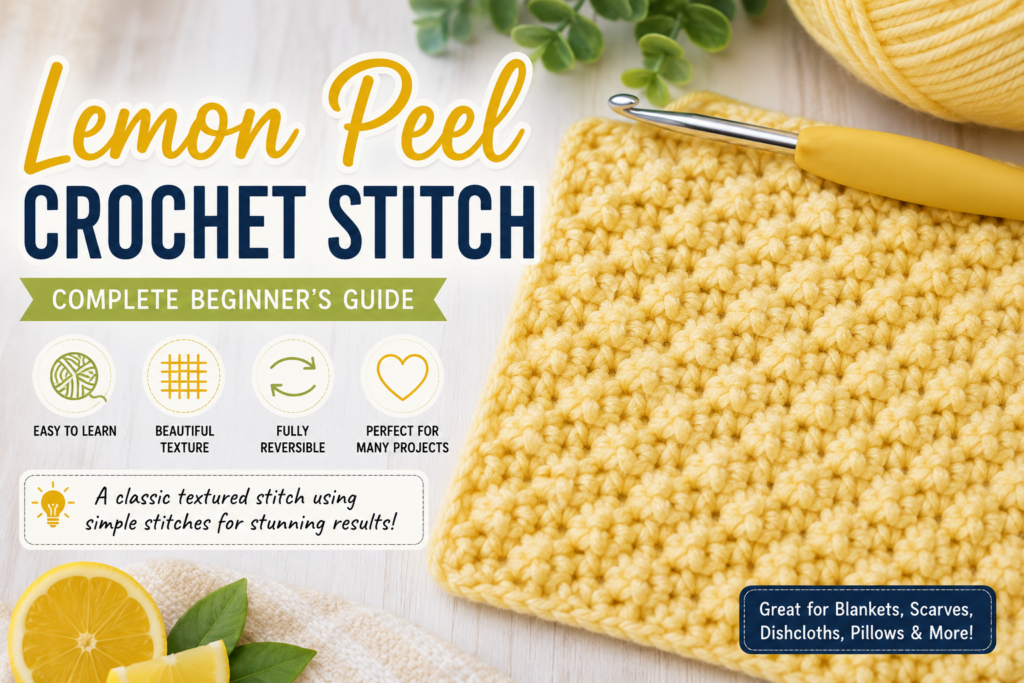
If you’ve ever seen a crochet fabric with little raised bumps arranged in a neat, woven-looking grid, you’ve probably seen the lemon peel crochet stitch in action. It’s one of those stitches that looks far more complicated than it actually is, which is exactly why it’s become a favorite for blankets, dishcloths, and cozy accessories.
In this guide, you’ll learn exactly what the lemon peel stitch is, how it’s different from similar textured stitches, and how to work it yourself, row by row. Whether you’re picking up a hook for the first time or you just want a clear, no-fuss tutorial, this article will walk you through everything from materials to finished project ideas.
What Is the Lemon Peel Crochet Stitch?
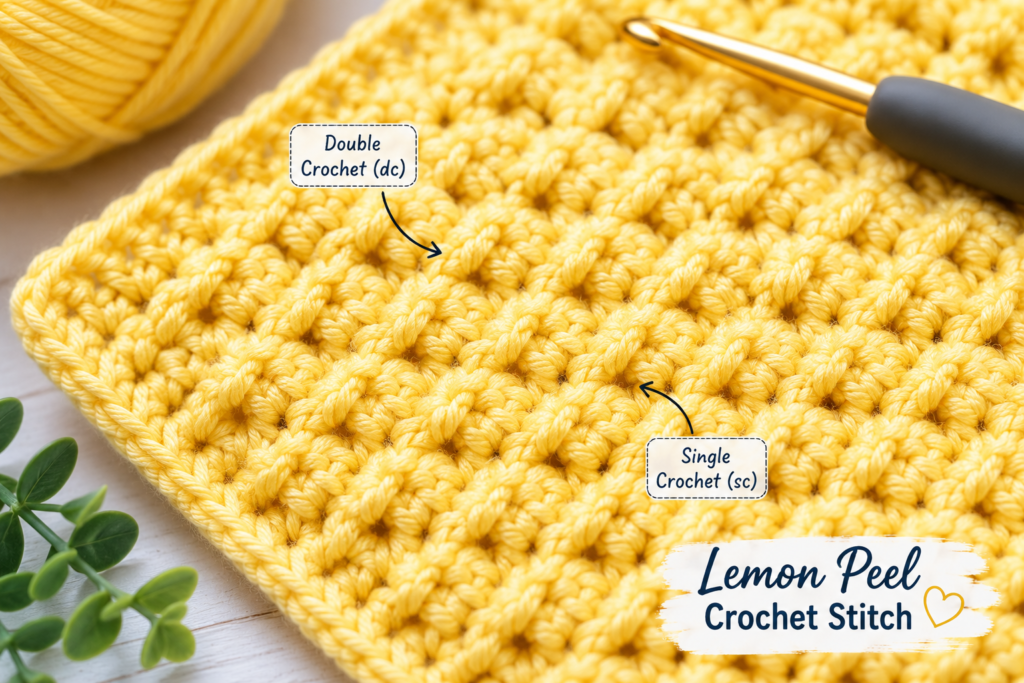
The Lemon peel crochet stitch is a textured crochet stitch made by alternating single crochet and double crochet stitches, then offsetting them on the next row so that each double crochet sits above a single crochet from the row before. That offset is the whole secret. It’s what creates the small, bumpy texture that looks a bit like the dimpled skin of a lemon.
Unlike lacy or open stitches, the lemon peel stitch produces a dense, sturdy fabric. It’s fully reversible too, which means both sides look neat and finished. That makes it a great choice for anything that gets used and washed a lot, like blankets and dishcloths.
You may also see this stitch called the crochet lemon peel stitch or simply the lemon peel stitch pattern in older pattern books. The name changes depending on the source, but the technique stays the same.
Quick Tip: If a pattern calls for “sc/dc offset stitch” or “woven bump stitch,” there’s a good chance it’s describing the same technique as the lemon peel stitch.
Why Crocheters Love This Stitch
There are a few reasons this stitch keeps showing up in pattern collections year after year.
- It creates texture without needing to learn a complicated stitch.
- It only uses two basic stitches: single crochet and double crochet.
- The fabric it creates is thick, cozy, and durable.
- It lies flat and resists curling better than many all-single-crochet fabrics.
- It looks equally good on both the front and back.
For anyone searching for an easy crochet stitch that still looks impressive, this is a solid pick. It’s often recommended right after basic single and double crochet as a natural next step.
Recommended products
-
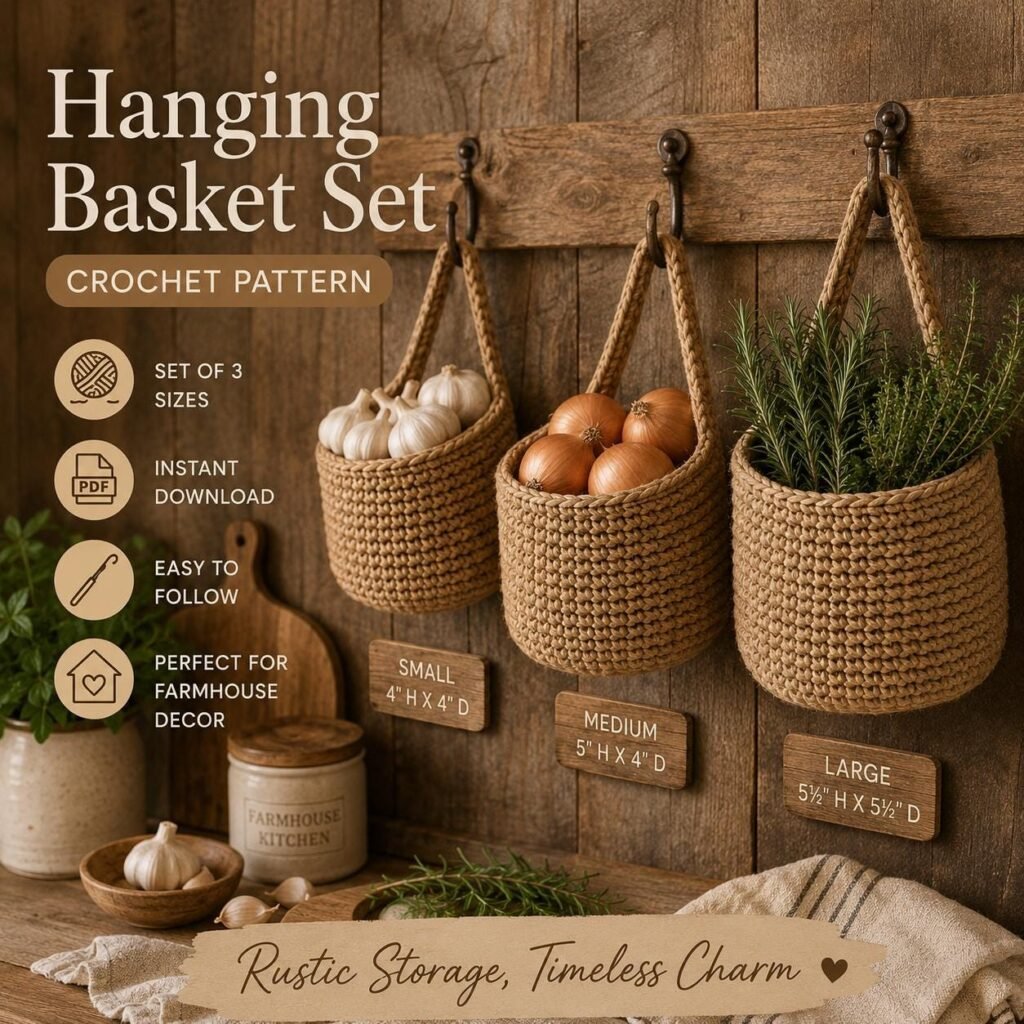
Crochet Hanging Basket Pattern Set, 3 Sizes, Farmhouse Decor (PDF Download)
$3.00 -
Crochet Tote Bag Pattern | Square Bottom Market Bag (PDF Download)
$3.00 -
Christmas Crochet Gift Bag Pattern PDF | Beginner Crochet Drawstring Bag | Holiday Gift Bag Crochet Pattern | Christmas Tree Bag
$3.00 -
Makeup Bag Sewing Pattern PDF Bundle, Zipper Pouch Pattern, Cosmetic Bag Sewing Pattern, 5 Sizes, DIY Sewing
$3.00 -
Chunky Ribbed Crochet Scarf Pattern | Easy Beginner BLO (PDF)
$3.00
Skill Level
This stitch is rated beginner to advanced beginner. If you’re comfortable making a chain, working a single crochet, and working a double crochet, you already have every skill you need. The only new concept is learning to “read” your stitches so you know where to place each one on the following row.
Materials Needed
Before you start, gather the following:
- A crochet hook (size depends on your yarn — see the hook size guide below)
- Yarn in your chosen weight and color
- Scissors
- A yarn needle for weaving in ends
- Stitch markers (optional, but helpful for beginners)
Yarn Recommendations
Almost any yarn works for the lemon peel stitch, but some choices show off the texture better than others.
- Worsted weight (medium) yarn is the most beginner-friendly option and works well for blankets and pillow covers.
- Cotton yarn is ideal for dishcloths and washcloths since it’s absorbent and holds its shape.
- DK weight yarn creates a slightly lighter fabric, nice for scarves and lighter garments.
- Acrylic yarn is budget-friendly, machine washable, and a solid all-purpose choice for blankets.
Whatever you pick, choose a solid or semi-solid color rather than a busy multicolor yarn. Because the beauty of this stitch is in its texture, a heavily variegated yarn can hide all that hard work.
Hook Size Guide
| Yarn Weight | US Hook Size | Metric Size |
|---|---|---|
| Fingering | C/2 – D/3 | 2.75mm – 3.25mm |
| Sport | E/4 – 7 | 3.5mm – 4.5mm |
| DK (Light Worsted) | 7 – I/9 | 4.5mm – 5.5mm |
| Worsted (Medium) | I/9 – K/10.5 | 5.5mm – 6.5mm |
| Bulky | K/10.5 – M/13 | 6.5mm – 9mm |
Pro Tip: Because the Lemon peel crochet stitch is dense, many crocheters like to go up half a hook size from what the yarn label recommends. This keeps the fabric from becoming too stiff.
Stitch Abbreviations
This pattern uses standard US crochet terms.
- ch – chain
- sc – single crochet
- dc – double crochet
- st(s) – stitch(es)
- rep – repeat
- RS – right side
- WS – wrong side
Gauge Information
Gauge will vary depending on your yarn, hook, and personal tension, but as a general reference point: with worsted weight yarn and a 5mm (US H/8) hook, a typical lemon peel stitch swatch measures about 13–14 stitches and 11–12 rows per 4 inches (10cm) over the pattern.
Always crochet a small swatch first, especially for a fitted project or anything where finished size matters. Because this is a dense stitch, gauge can shift more than you’d expect with even a small hook size change.
Step-by-Step Instructions
This section breaks the lemon peel stitch down into simple, repeatable steps. Read through once before you start so you understand the rhythm of the pattern, then follow along row by row.
Foundation Chain
Chain an even number of stitches. The exact number depends on how wide you want your project, but for a practice swatch, chaining 20–24 stitches is a comfortable size to work with.
Tip Box: New to counting chains? Lay your chain flat and count each “V” shape, not including the loop still on your hook.
Row-by-Row Written Pattern
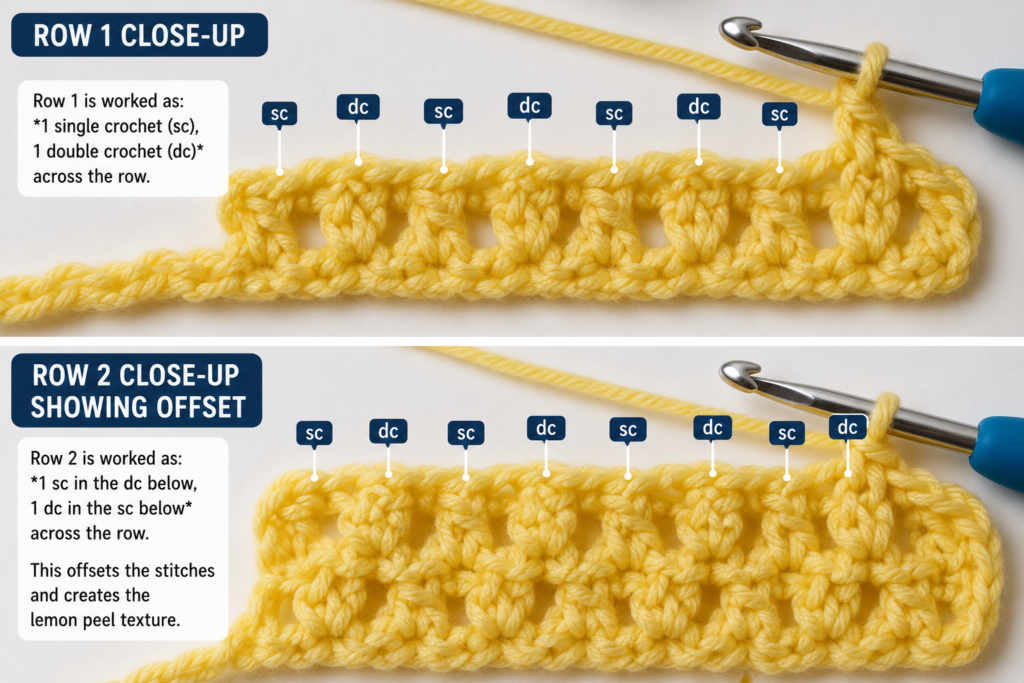
Row 1 (Right Side): Single crochet in the 2nd chain from your hook. *Double crochet in the next chain, single crochet in the next chain; repeat from * across the row. Turn.
Row 2: Chain 1 (this does not count as a stitch). Double crochet in the first stitch. *Single crochet in the next stitch, double crochet in the next stitch; repeat from * across, ending with a single crochet in the last stitch. Turn.
Row 3 and all following rows: Repeat Row 2. Each row naturally offsets the double crochets so they land above the single crochets from the row before, and vice versa. This offset is what builds the lemon peel texture as you go.
Tip Box: If your stitch count feels off partway through a row, pause and count. It’s much easier to fix a mistake three stitches back than to rip out an entire row.
How to Repeat the Pattern
Once you’ve completed Row 2, you’re officially “in pattern.” From here, every row simply repeats Row 2: chain 1, turn, then alternate double crochet and single crochet, making sure each stitch type lands on top of the opposite stitch type from the row below.
A simple way to remember it: wherever you see a bump (double crochet) below, work a single crochet on top of it. Wherever you see a flat stitch (single crochet) below, work a double crochet on top of it.
Keep repeating this row until your piece reaches your desired length, then fasten off and weave in your ends.
Stitch Diagram Explanation
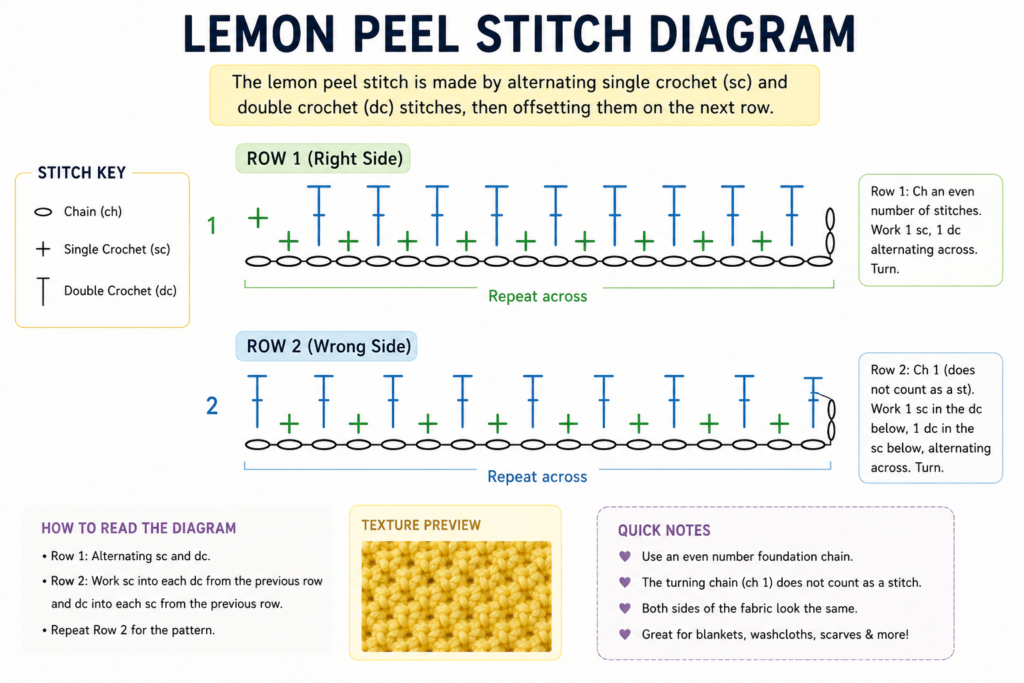
If you’re a visual learner, a stitch diagram can make this pattern click much faster than written instructions alone. In a typical lemon peel stitch diagram:
- Symbols for single crochet (usually a small “x” or “+”) and double crochet (usually a “T” shape) are arranged in a checkerboard-style offset pattern.
- Each row is shown as a horizontal line of symbols, stacked so you can see how the offset shifts row by row.
- The “bumps” in the finished fabric correspond to the double crochet symbols.
When following a diagram, always work from right to left for right-side rows and left to right for wrong-side rows, unless the pattern specifies working in the round.
Tips for Perfect Tension
- Keep your working yarn tension consistent; don’t pull tight after finishing a double crochet, since that’s a common spot for tension to tighten up.
- Practice on a swatch before starting your full project, especially if you’re new to switching between two stitch heights in one row.
- Hold your hook and yarn the same way every row. Small changes in grip can subtly change your gauge.
- If your fabric looks wavy, your tension may be inconsistent between single and double crochet stitches. Slow down and focus on even pulls.
Pro Tip: Count your stitches at the end of every row for your first full project. Once the rhythm feels natural, you can check less often.
Common Mistakes and How to Fix Them
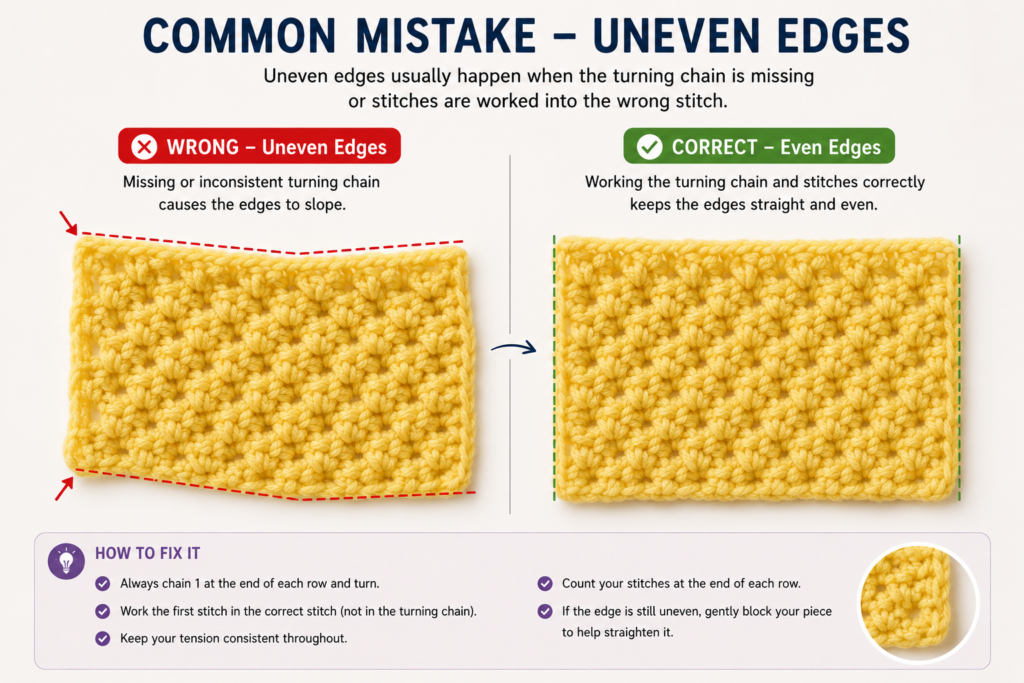
Mistake: Losing count of the offset. Fix: Pause at the start of each row and look at the stitch directly below your hook. That tells you exactly which stitch to make next.
Mistake: Edges look uneven or slanted. Fix: Make sure you’re working into the very first and last stitch of every row, including the turning chain when required.
Mistake: The fabric looks flat instead of bumpy. Fix: This usually means the offset wasn’t maintained. Check that your double crochets are landing above single crochets, not stacking directly on top of other double crochets.
Mistake: Fabric is too stiff. Fix: Try going up half a hook size, or loosen your tension slightly, especially on the double crochet stitches.
Mistake: Miscounting the foundation chain. Fix: Since this pattern needs an even number of chains, recount before Row 1. An odd chain count will throw off the entire offset pattern.
Best Projects for Lemon peel crochet stitch
This stitch’s density and reversibility make it useful for a wide range of projects.
Baby Blankets
The tight, warm fabric is great for baby blankets, and the texture adds visual interest without needing a complicated color pattern.
Scarves
A DK or worsted weight scarf in this stitch has enough drape to wrap comfortably while still holding its shape.
Dishcloths
Cotton yarn plus this stitch equals a sturdy, absorbent dishcloth with a bit of built-in scrubbing texture.
Washcloths
Similar to dishcloths, washcloths benefit from the same cotton-and-texture combination, with a slightly softer yarn choice for skin.
Pillow Covers
The dense fabric holds its shape well over a pillow form, and the reversible texture means you don’t have to worry about a “wrong side” showing.
Tote Bags
Sturdy cotton or cotton-blend yarn worked in this stitch creates a bag with structure and grip.
Table Runners
A long, narrow lemon peel stitch panel makes an easy table runner with texture that looks intentional and tailored.
Best Yarn Colors
Because the texture is the star of this stitch, color choice matters more than it might for other patterns.
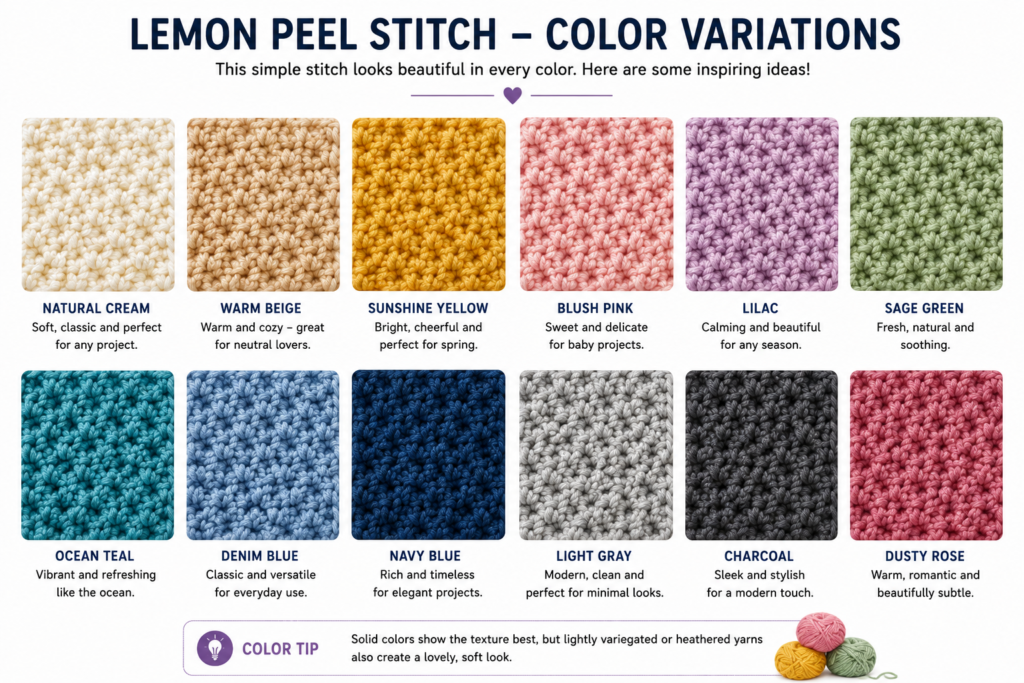
- Solid colors show off the bumps most clearly.
- Tonal or semi-solid yarns (where the color shifts subtly within the same shade) add depth while still letting the texture shine.
- Light and medium shades tend to show shadow and texture better than very dark colors, where the bumps can get lost.
- Busy variegated yarns are the one type to avoid if you want the stitch pattern to stand out.
Stitch Variations
Once you’re comfortable with the standard version, try these variations:
- Mini Lemon Peel: Use half double crochet instead of double crochet for a shorter, subtler bump.
- Extended Lemon Peel: Use treble crochet for a taller, more dramatic texture.
- Colorwork Lemon Peel: Switch main colors every few rows for a striped, textured effect.
- Chunky Lemon Peel: Work the same pattern in bulky yarn for a fast, oversized-texture blanket.
Lemon peel crochet stitch vs Moss Stitch
These two stitches are often confused because both create a light, bumpy texture, but they’re built differently.
| Feature | Lemon Peel Stitch | Moss Stitch |
|---|---|---|
| Stitches Used | Single crochet + double crochet | Single crochet + chain-1 space |
| Texture | Dense, raised bumps | Lighter, more open weave |
| Yarn Usage | Uses more yarn | Uses less yarn |
| Drape | Firmer, less drape | Softer, more drape |
| Best For | Blankets, dishcloths, bags | Scarves, shawls, garments |
Note: Stitch names can vary by region and pattern source. Some designers use “moss stitch” and “lemon peel stitch” almost interchangeably, so always check the written instructions in any pattern you’re following rather than relying on the name alone.
Lemon peel crochet stitch vs Seed Stitch
Seed stitch is another close relative, and again, naming conventions vary between crochet communities.
| Feature | Lemon Peel Stitch | Seed Stitch |
|---|---|---|
| Row Offset | Yes, alternates every row | Sometimes worked without offset |
| Texture Pattern | Woven, checkerboard bumps | Scattered, nubby texture |
| Difficulty | Beginner-friendly | Beginner-friendly |
| Common Uses | Blankets, home decor | Garments, textured panels |
In practice, many crocheters use “seed stitch” and “Lemon peel crochet stitch” to describe very similar or even identical fabrics. When in doubt, work a small swatch from the written instructions to see exactly what texture a specific pattern produces.
Blocking Tips
- Wet blocking (lightly wetting the finished piece and laying it flat to dry) helps even out any minor tension differences.
- Pin your project to the correct measurements before it dries, especially for blankets and pillow covers.
- Because this stitch is dense, it won’t stretch or “open up” the way lace stitches do when blocked — expect a subtle smoothing effect rather than a dramatic size change.
- Always check your yarn label before blocking. Some acrylic yarns respond better to steam blocking than wet blocking.
Washing and Care Instructions
- Check the yarn label first; fiber content determines the safest washing method.
- Cotton projects (like dishcloths) are usually machine washable and can handle regular use.
- Acrylic blankets typically do well on a gentle machine cycle with cold water.
- Wool or wool-blend projects often need hand washing to avoid felting or shrinking.
- Always lay projects flat to dry rather than hanging them, since hanging can stretch the dense fabric out of shape over time.
Frequently Asked Questions
1. What is the lemon peel crochet stitch used for? It’s commonly used for blankets, dishcloths, scarves, and any project where a textured, sturdy fabric is helpful.
2. Is the lemon peel stitch beginner-friendly? Yes. It only requires single crochet and double crochet, making it a great next step after learning the basics.
3. How many stitches do I need to start? You’ll need an even number of chains for your foundation row.
4. Does the lemon peel stitch curl? Generally no. Because it alternates two stitch heights and stays dense, it tends to lie flatter than plain single crochet fabric.
5. How much yarn do I need for a blanket? This depends on blanket size and yarn weight, but expect to use more yarn than a simple single crochet blanket of the same size, since the stitch is dense.
6. What’s the difference between lemon peel and moss stitch? Lemon peel uses single and double crochet stitches together, while moss stitch typically uses single crochet paired with chain-1 spaces, creating a lighter fabric.
7. Can I use lemon peel stitch for garments? Yes, though because the fabric is dense and has limited stretch, it works best for structured pieces rather than close-fitting stretchy garments.
8. Why does my lemon peel stitch look uneven? This usually points to an inconsistent offset. Double-check that each stitch is landing on the opposite stitch type from the row below.
9. What hook size should I use? This depends on your yarn weight; see the hook size guide earlier in this article for suggested ranges.
10. Is this stitch reversible? Yes, one of its biggest advantages is that both sides of the fabric look neat and finished.
11. Can I do the lemon peel stitch in the round? It’s possible, but it requires adjusting the stitch count and offset pattern, since working in the round changes how the pattern repeats. It’s easier to first master it worked flat in rows.
12. How do I count rows in this pattern? Count the raised bump rows across the fabric, or simply keep a tally on paper or with a row counter as you go.
13. What yarn weight works best for a lemon peel dishcloth? Worsted weight cotton is the most popular choice for dishcloths made in this stitch.
14. Does the lemon peel stitch use a lot of yarn? It uses more yarn than open or lacy stitches because the fabric is dense, but it’s comparable to other solid, textured stitches.
15. Can beginners make a blanket with this stitch? Absolutely. Once you’re comfortable with the offset rhythm, repeating it across a full blanket is very manageable, even for a first big project.
Final Thoughts
The lemon peel crochet stitch is proof that you don’t need a long list of fancy techniques to create a fabric that looks polished and intentional. With just single crochet, double crochet, and a simple offset rule, you can build blankets, dishcloths, and accessories that feel genuinely handmade in the best way.
If you’re ready to try it, chain an even number of stitches, work through the first two rows slowly, and let the rhythm take over from there. Once it clicks, you’ll likely find yourself reaching for this stitch again and again.